
Stop repeated force that could break the key
Checkpoint 1 keeps stop repeated force that could break the key tied to the exact vehicle and requested result.
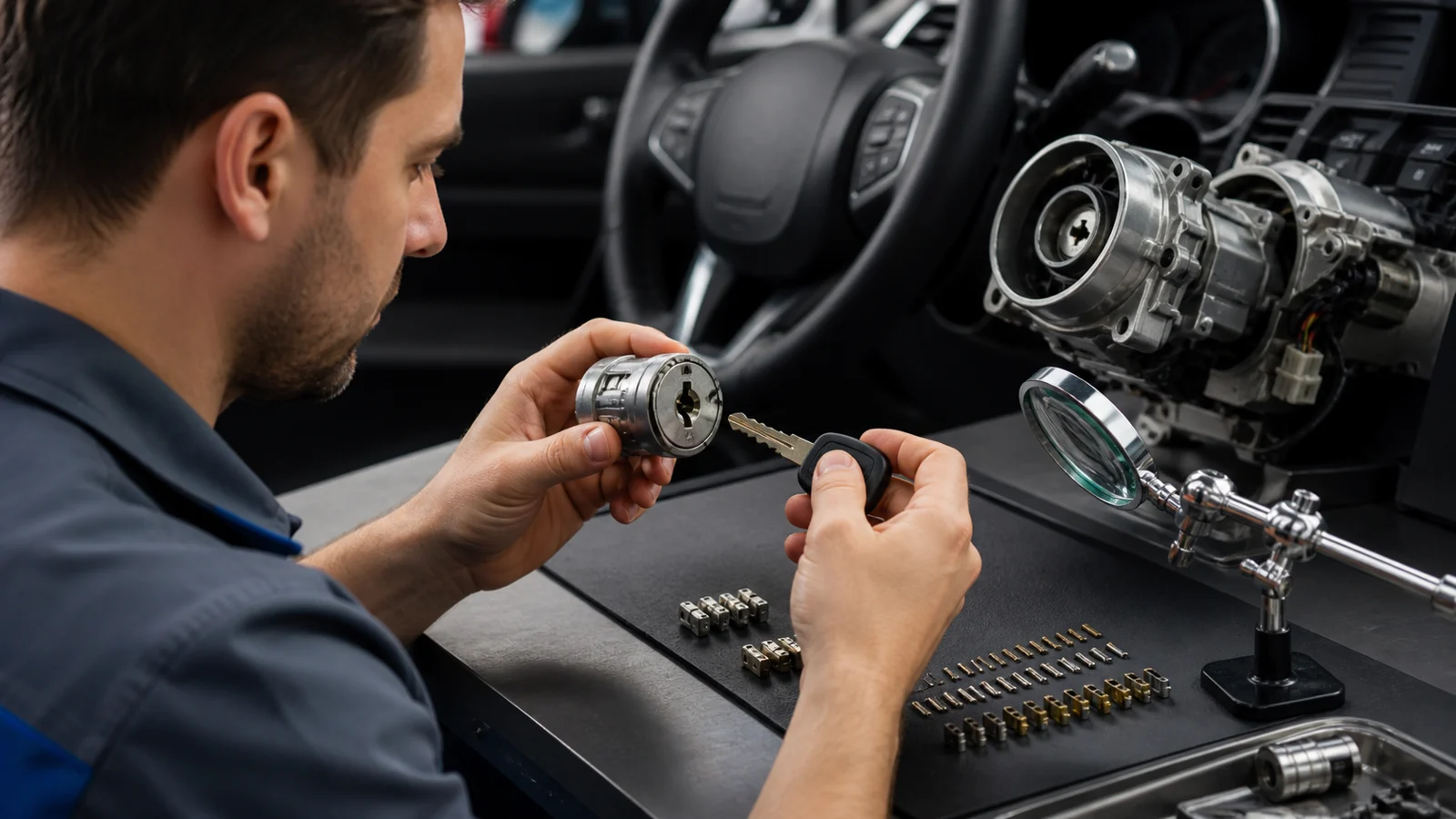
Vehicle-specific planning
A key that will not turn does not automatically mean the ignition cylinder must be replaced. Key wear, steering tension, debris, cylinder wear, and electronic authorization can create similar symptoms. This guide explains the checkpoints that should come before authorization and the tests that should come before closeout.
Diagnosis before assumption
State whether any working key remains, what the doors and ignition do now, and what changed before the failure. Vehicle year, make, model, trim, key shape, remote buttons, and start method all help distinguish mechanical entry from electronic authorization.
Do not force a key or use an improvised entry method while waiting for an answer. Modern doors can contain airbags, wiring, weather seals, and frameless glass. Ignitions and steering locks can also be damaged by repeated force.
Scope clarity
A request for a “key” can mean a door blade, a transponder key, an integrated remote, a proximity fob, or an emergency insert. Describe the functions expected after service so the estimate and final test use the same definition.
Ask what parts, programming, travel, taxes, and tests are included. If inspection changes the path, approve the revised scope before work continues.
Five checkpoints
Checkpoint 1 keeps stop repeated force that could break the key tied to the exact vehicle and requested result.
Checkpoint 2 keeps compare the symptom with a spare key when available tied to the exact vehicle and requested result.
Checkpoint 3 keeps inspect the blade, cylinder, steering tension, and electronic authorization tied to the exact vehicle and requested result.
Checkpoint 4 keeps explain repair, key replacement, or referral options tied to the exact vehicle and requested result.
Checkpoint 5 keeps test every ignition position and key-removal behavior after service tied to the exact vehicle and requested result.
Deeper vehicle-key planning
Write the symptom as an observable sequence: what button was pressed, what sound or light appeared, whether the security indicator changed, and whether a spare behaved differently. Observable facts are more useful than naming a failed part before diagnosis.
Also note whether a spare key changes the result, whether the vehicle battery has recently been weak or disconnected, and whether dashboard security indicators behave differently. Do not keep repeating a step that increases resistance, heat, noise, or damage.
Part numbers help, but they are not the only check. Market, production date, trim, prior module replacement, aftermarket alarms, and the current key inventory can affect the programming path. Keep packaging and identifiers until every agreed function passes.
Cutting a blade or opening sealed packaging can limit return options. Ask which identifiers were checked and preserve the old parts, labels, and purchase records until the replacement has passed its complete test.
Do not lubricate an ignition with an unspecified household product or force the steering wheel and key together. Contamination, broken key fragments, worn blades, and steering-lock tension can create overlapping symptoms and may worsen with improvised treatment.
A no-start condition is not always an ignition-cylinder problem. Battery voltage, immobilizer authorization, switch behavior, and other vehicle systems can produce similar outcomes. Keep the recommendation limited to what the inspection actually supports.
Ask the estimate to separate service travel, diagnosis, hardware, cutting, programming, taxes, and any optional functions. A single unexplained total makes it difficult to compare scopes or understand why inspection changed the recommendation.
Ask what finding could change the amount and what happens if the proposed part cannot be programmed. Do not approve a broader service merely because equipment is already connected to the vehicle.
Vehicle and property care
A vehicle on a traffic lane, freeway shoulder, steep drive, active loading zone, or restricted property may need to be moved or made safe before routine service begins.
Tell the dispatcher about low garage clearance, underground levels, gate access, tow-yard rules, airport or campus restrictions, and whether the vehicle can be reached from both sides. Do not ask a technician to work where passing traffic, poor lighting, unstable ground, or property rules make the setup unsafe.
If the vehicle has frameless glass, side-curtain airbags, custom security equipment, or visible prior damage, mention that before entry or trim work. Existing damage should be documented so the before-and-after condition is clear.
Closeout standard
Use a written function list. Mechanical entry, ignition rotation, engine authorization, lock and unlock buttons, trunk release, panic button, passive entry, passive start, and emergency insert operation are separate checks. Test only the functions included in the approved scope, but test every one of those functions.
Where multiple keys remain active, test each one. Confirm that the new work did not disable an existing key that was supposed to remain authorized. If a function is intentionally unavailable, put that limitation on the invoice rather than relying on memory.
Store invoices, part identifiers, and key records securely. Do not leave a key code, VIN record, or ownership document in an unlocked vehicle. If a lost key creates an ongoing security concern, ask what options exist for deauthorizing it on the exact vehicle.
Service-area directory
Each location page covers access planning and roadway context without promising current availability.
Questions before you authorize work
Prepare the year, make, model, trim when known, current key state, exact symptom, and location.
Vehicle entry and key generation affect security. Identity and lawful-control checks protect vehicle owners.
No. Similar-looking keys and fobs can use different blades, boards, frequencies, transponders, and proximity systems.
Test every function included in the approved scope before the visit closes.
Call (877) 771-4458 with the vehicle and location details. This page does not promise response times or availability.
Decision framework for Ignition Repair
Keep every existing key, broken piece, fob shell, battery, package label, and purchase record. Photograph visible damage before disassembly. Write down the last successful use, the first failure, and intermittent behavior between them.
Do not clean, lubricate, glue, bend, or modify a failed part before it is identified.
List mechanical entry, ignition rotation, immobilizer authorization, remote buttons, emergency insert, passive entry, and passive start separately. One key housing may contain several systems.
A guide can explain those layers, but the exact production configuration still requires vehicle-specific confirmation.
One option may restore entry only; another may add a start-authorized key; another may include remote or proximity functions. Compare the result, limitations, testing, and retained-key behavior.
Ask whether old keys remain active and whether a missing key can be removed from authorization on the exact vehicle.
State intended functions, included parts, programming, travel assumptions, taxes, and the test plan. Ask what finding could change the recommendation and require approval before broader work begins.
Never let “we are already here” replace informed authorization.
Share garage level, clearance, gate procedure, stall number, tow-yard rules, campus or airport restrictions, and whether both sides of the vehicle are reachable. Move away from active traffic when possible.
For a life-safety emergency, contact emergency services or the appropriate roadside authority first.
Test every function named in the scope and every existing key intended to remain active. Inspect nearby trim, glass, weather seals, locks, handles, and indicators when entry or ignition work occurred.
Keep the invoice, identifiers, and test note in a secure location separate from the vehicle.
Buyer workbook
Describe observable behavior rather than naming a failed part. State whether doors respond, the blade turns, security indicators change, the engine cranks, and a spare produces a different result.
Note impact, water exposure, battery service, a jump-start, gradual wear, intermittent detection, a broken shell, or a key becoming harder to turn. The timeline separates similar symptoms.
Mechanical entry, ignition rotation, start authorization, remote buttons, trunk release, panic, proximity entry, and proximity start are separate deliverables. Name the ones you expect.
Ask how the blade, transponder, remote board, frequency, part number, and proximity system were matched to the exact vehicle. Appearance alone is not a compatibility check.
Clarify service travel, diagnosis, hardware, cutting, programming, taxes, optional functions, and the consequence if the proposed part is not accepted by the vehicle.
Agree on the test before work begins. For mobile auto locksmith, every function in the approved scope should be demonstrated while the vehicle is present.
A VIN, registration, title, key code, ownership document, and programming record are sensitive. Share them only through a channel you have verified. A lawful-control check should explain what is needed and why.
Do not leave copies or key records in an unlocked vehicle. Store the invoice and identifiers securely after the work.
Do not force a resistant key, pry a modern door, repeatedly cycle an inconsistent ignition, or cut an unverified blank merely to try it. These actions can add damage without resolving compatibility.
Do not accept a changed scope only because work has started. A new recommendation needs a new explanation and fresh authorization.
Prepare the vehicle details
Current routing and scope must be confirmed for the exact vehicle and location.